
The idea of learning about your dog’s age might be familiar to you, as it often comes in comparison debates like “dog years” vs. “human years.” Researchers found out that different dogs age at different rates; hence, there is variation in each dog breed life expectancy. In such a case, your eagerness to find out why do dogs have short life spans is understandable.

If, as a dog owner, you wonder how old your dog is and how to extend their life, you are not alone. Research reveals that there are certain factors affecting dog lifespan, including the dog’s age, weight, size, breed, and genetics. Let pet life easy guide uncover the genetic factors dogs have, impacting their lifetime.
Table of Contents
Dog’s Aging Theory
Before we talk about small dog vs large dog lifespan, let’s have a look at the dog aging process. To understand the aging concept, finding how we age rather than why we age is crucial because the fact that some species live longer can make one wonder why dogs die young and why don’t all the species evolve for longevity.
Aging in dogs is a complex biological process that is followed by early and rapid maturation and a high metabolism rate. Due to the accumulation of molecular damage, dogs get senior status by the age of 7. However, in comparison, puppies might show signs of maturity at the age of 10. The signs of aging in dogs are muscle atrophy, arthritis, reduced mobility, and graying fur. In addition, they possibly experience cognitive function issues and diminished memory.
Average Dog Lifespan
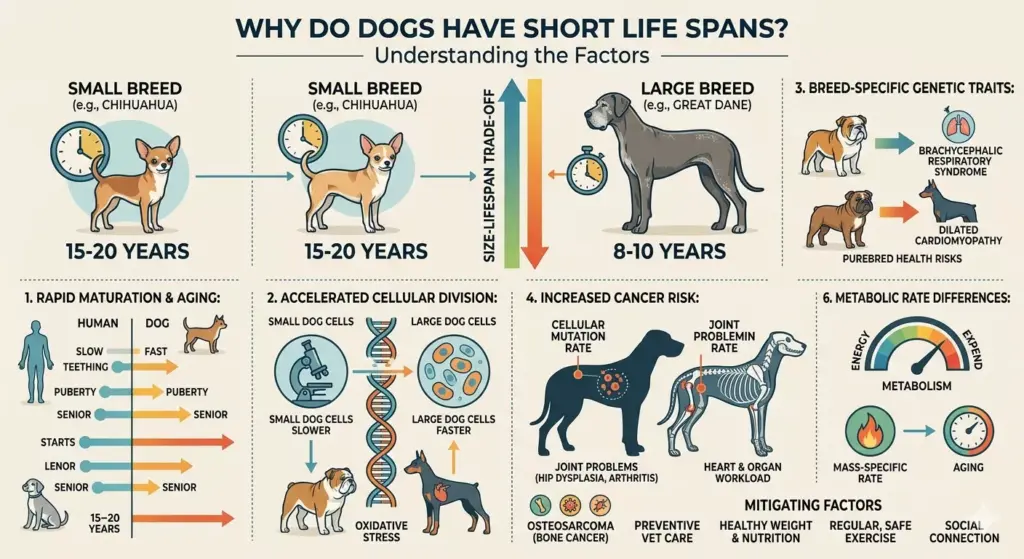
Dogs are found to be the most diverse species on the planet when it comes to their physique, ranging from the small Chihuahua to the giant Great Dane. The lifespan of each breed dramatically differs due to their diversity and selective breeding.
Although the average lifetime is around 10-13 years based on certain factors affecting dog lifespan, the numbers hide enormous variations. Before we get to know why do dogs have short life spans, let’s get a brief idea of the expected lifetime based on the dog’s size with the help of a comparison table.
Small Dog vs Large Dog Lifespan Comparison Chart
Dog Size | Dog Lifespan |
| Small Dogs | 10-15 Years |
| Medium Dogs | 10-13 Years |
| Large Dogs | 10-12 Years |
| Giant Dogs | 8-10 Years |
Why Do Small Dogs Live Longer?
While the primary cause of this fact is still not settled properly, it is considered that small dogs live longer. because they age slowly. The reason behind this is that they have a low cancer rate, experience less metabolic strain on their bodies, and have less disease as compared to larger breeds.
Moreover, dogs have a high metabolic rate that lowers cell damage and contributes to lifetime enhancement and a slow dog againg process. On average, small dogs tend to live nearly 10-15 years. In addition, based on breed type, size, and health care, dog longevity can be prolonged even more. Know how long do small dogs live:
| Small Dog Breeds | Lifespan |
| Chihuahua | 14–16 years |
| Pomeranian | 12–16 years |
| Yorkshire Terrier | 11–15 years |
| Shih Tzu | 10–18 years |
Why Do Large Dogs Live Shorter?
Wondering why do dogs have short life spans? As compared to small dogs, large ones tend to live for less time because they grow at an accelerated rate. Due to a high growth rate, radical damage to cells increases and leads to faster aging. In addition, it creates a higher risk of diseases like musculoskeletal issues and cancer.
Some breeds grow 100-fold in their first year, like the Great Dane, and suffer from premature aging that puts significant strain on their bodies. Premature growth is one of the highlighted factors affecting dog lifespan. It triggers certain health issues in dogs, like cancer and metabolic stress. Know how long do large dogs live:
| Large Dog Breeds | Lifespan |
| Golden Retriever | 10–12 Years |
| Rottweiler | 9–10 Years |
| Belgian Malinois | 14–16 Years |
| Bernese Mountain Dog | 7–10 Years |

Why Do Mixed Breeds Live Longer?
It is said that purebred dog longevity is less than that of mixed breeds, which is directly related to their genetics. Genetics play the vital role in breed life expectancy. Purebreds are more prone to specific hereditary diseases because they and the other dogs share the same genes.
Putting the differences of small dog vs large dog lifespan aside, mixed breeds have increases lifetime because they have a reduced risk of diseases. Although some of these breeds still have some sort of heatstroke and respiratory issues, most of them are fortunate enough to live for 10-13 years, featuring a slow dog aging process.
| Mixed Dog Breeds | Lifespan |
| Pug-Coton | 15-19 Years |
| Cockapoo | 10-15 Years |
| Shiba Inu Mixes | 15-20 Years |
| Australian Cattle Dog Mixes | 20-25 Years |
Influencing Factors that Dictate Dog Lifespan
A dog’s lifespans are primarily dictated by genetics, care, weight, size, dietary habits, and physical activity levels. Other than this, some major factors affecting dog lifespan are given below!
Size and Development
Growth and size matter the most in deciding and impacting their lifelines. Small breeds are linked to longer life due to fewer genetic and physical issues, while large breeds die young because of inherited issues.
Natural Evolution
Curious why dogs die young while several other animals live 10-20 years when they are in the proper human care. This usually happens when breeders dramatically reduce the genetic pool variability. This allows only a small number of individuals with particular traits to reproduce.
Genetics and Breeding
Naturally inherited diseases, including heart disease or cancer, can be genetically passed through one generation to the next. As we talked earlier, mixed breeds outlive pure ones, possessing lower risks compared to purebreds.
Dental Health
Dental health directly impacts the internal organ health of a canine and the overall body as well. Neglected oral hygiene can cause periodontal disease that affects the gums, and bacteria can enter the bloodstream and trigger other health issues in dogs, such as damaging vital organs like the liver, kidneys, and heart.
Diet and Nutrition
A healthy diet is the key, while over feeding can lead to obesity. According to research, overweight dogs live two years less than the balanced ones. To keep a check on their diet, use dog or cat automatic feeders that offer scheduling of the portioned meals.
Lifestyle & Environment
A safe, stress free, and calm environment contributes significantly to the overall wellness and lifespan. Maintain a healthy lifestyle with enough exercise, playtime, and mental stimulation that positively impacts their mind and improves longevity.
Preventive Care
Early detection of illness and disease provides you with enough control over handling and treatment. That is why, keep up on regular veterinary check ups, vaccinations, and parasite control. Address the issues promptly as soon as they are diagnosed to help them live long.
Tips to Help Your Dog Live Longer
All thanks to the advances in preventive medicine and veterinary science, you don’t need to worry about why do dogs have short life spans. Now that you know the factors affecting dog lifespan, let’s discuss how you can help them live longer.
Do Your Research
The lifespan of dogs are breed dependant, hence, careful research is crucial for the dog. Purchase from responsible and reputable breeders after genetic and health screening tests. Knowing enough about their health and life spans can help you make an informed decision.
Maintain a Healthy Weight
One of the primary causes to reduce a dog’s lifespan is obesity. That is why, feed them only the calorie controlled, nutritious, and healthy diet that can enhance a dog’s life by up to 2 years. Must ask the vets or nutritionist which fruits, veggies, meat, and raw chicken good for dogs to ensure they eat what keeps their weight balanced.
Feed Healthy
Feeding a nutritious and healthy diet to dogs keeps them healthy and active. A diet that is well balanced prevents obesity and supports immune, digestive, and metabolic systems. Compare
dry vs wet dog food, fruits and veggies, and homemade and commercial foods with vet’s assistance before feeding them.
Breed Specific Exercise
Besides a healthy diet, physical capabilities are what help dogs live longer and healthier lives. That’s because it prevents obesity, maintains joint health, and supports cardiovascular fitness.
health issues in dogs. Consistency in physical activity notably cuts vet bills and visits, indirectly enhancing average dog life expectancy.
Keep Safe Against Accidents
Preventing accidents and serious injuries is also a factor that helps your dog go on with their life. Must avoid any serious hits by cars, ingesting toxins, and severe falls. Even if these accidents happen, seek medical assistance immediately.
Administer Parasites Preventive
Besides genetic factors of dogs, parasite prevention can also improve the average dog life expectancy. Vaccinations for location specific tick, flea, and heartworm prevention are crucial to prevent irritation, skin infection, hair loss, and intense itching.
Follow the Vet’s Instructions
For dog longevity tips, following a veterinarian’s preventive health recommendations is mandatory. Make sure to consider the pros and cons of feeding a dog vegetables, fruits, and any other food. Go for proper testing, diagnosis, and treatment to prevent any mishap.
It’s a Wrap
Are you curious how long does dogs and puppies live? Or why dogs die young? This guide, which explains the dog aging process, health issues in dogs, dog longevity period, and factors affecting dog lifespan in detail, is for every pet parent. Being one of the best fast developing pet, giant dogs tend to live shorter, and puppies tend to live for a long span.
However, in comparison, mixed breed life expectancy is higher than purebred due to genetic variations. In addition, active dogs who live healthy, eat healthy, and grow healthy will have a better quality of life. To let your pets live to their maximum, make sure they eat a nutritional diet, exercise well, and are taken to a veterinary clinic for routine check ups.
FAQs About Why Do Dogs Have Short Life Spans
Why Do Dogs Live Shorter Lives Than Humans?
Dogs grow and age much faster than humans and often mature in the first year, which is equivalent to humans’ 15 years. Due to their genetics, metabolism, and body size, their cells and organs wear out quickly.
Do Smaller Dogs Live Longer Than Larger Dogs?
Yes! Small dogs and puppies age more slowly than larger ones. Mixed breeds generally live longer than purebreds due to diversity in genetics; however, it depends on the dog’s health, care, and weight as well.
How Does Breed Affect a Dog’s Lifespan?
Breed, particularly in type and size, is the primary determinant of a dog’s lifespan. Small breeds live around 10-15 years and large breeds around 6-10 years due to their aging differences, and hereditary or health related issues.
Does Diet Impact a Dog’s Lifespan?
Yes! A balanced diet, proper nutrition, and healthy weight management improve longevity and reduces age related health diseases. A poor diet leads to inflammation, obesity, and organ stress.
Can Exercise Help Dogs Live Longer?
Regular exercise supports heart health, reduces stress, helps maintain a healthy weight, supports joint health, and keeps muscles healthy, which extends a dog’s life.
Are There Other Factors That Affect a Dog’s Lifespan?
Yes! Factors like genetics, health care, lifestyle, and environment all influence a dog lifespan. With regular check ups, preventive care, and safe living conditions, dogs tend to live longer.