
Cats diet plays a significant role in it’s well being, and choosing what’s best can be a challenge. As soon as you know what to feed them, the next step is figuring out how much to give them for meals. To maintain their health, ideal body weight, and energy levels, they need essential nutrients.
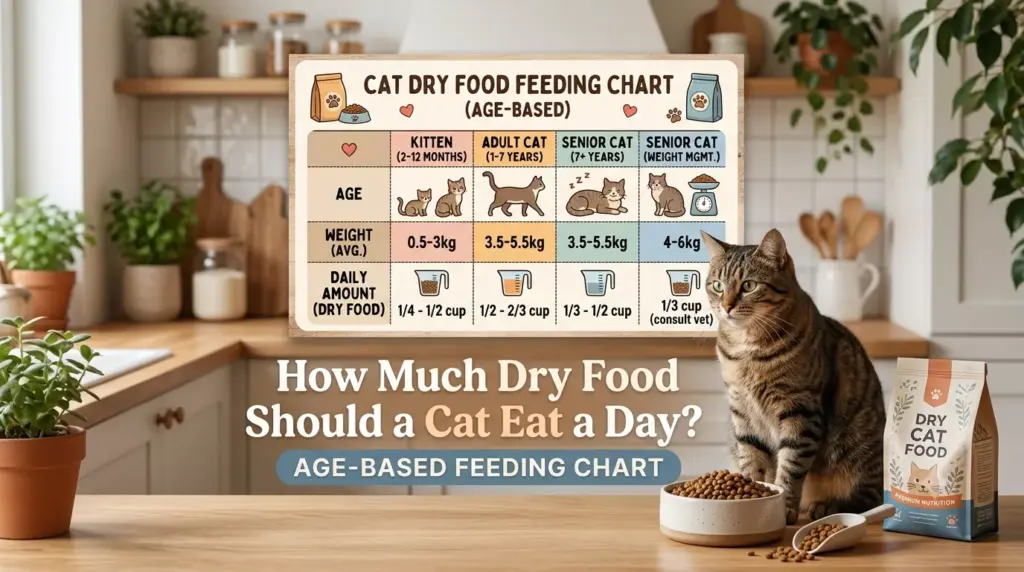
If you are confused about whether your cat is eating too much or too little, it is better to ask your veterinarian for a proper food feeding chart. Feeding frequency and amount matter for your feline to live the best life, rather than giving them guessed food portions. Our pet life expert guide provides you with the compiled version for everything you need to know about pet feeding.
Table of Contents
How Much Dry Food Should a Cat Eat a Day? Explained
Cats, famous for being the picky eaters, have diversity in eating food types and amount based on their breeds and age. Kittens, adults, and seniors’ requirements for food differ from each other relative to their weight and health conditions. Kittens need multiple feedings of about 3-4 meals, and adults require 2-3 meals a day. While for seniors, it is 2-3 smaller meals in a whole day.
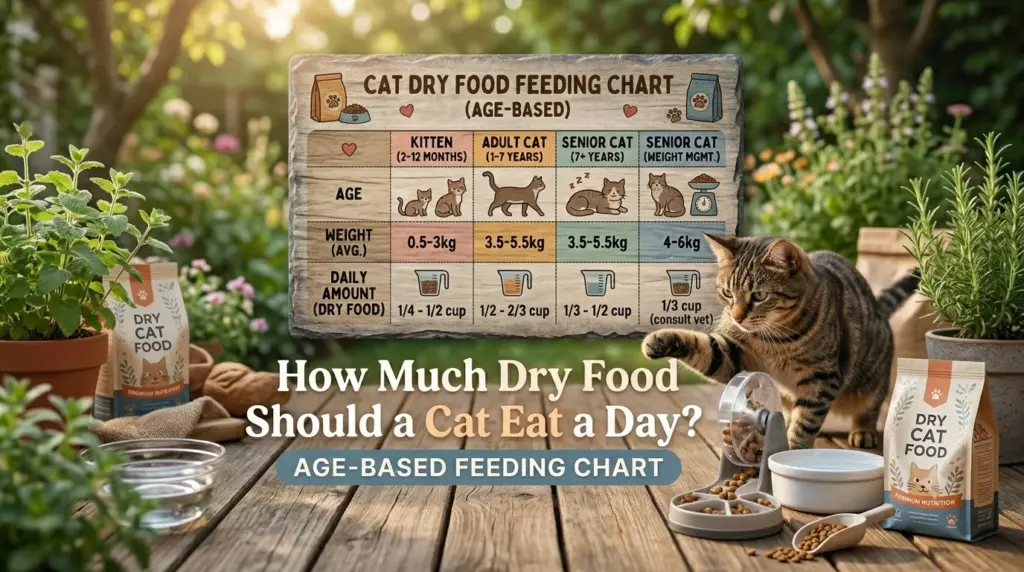
Aside from that, you might be curious to know how much water a cat should typically drink to stay hydrated. They can drink between 50 and 60 ML of water per kg of body weight. However, if you feed them the best canned food, it contains high moisture content, which contributes to their daily intake of water. Ensure providing them fresh food and clean water. In addition, follow the veterinarian’s feeding chart given below for a clear picture of how much dry food should a cat eat a day.
Cat Food Feeding Chart By Age
| Cat Type (By Age) | Daily Calorie Intake | Feeding Frequency | Dry Food(Grams/Cups) | Mixed(Dry & Wet Food) |
| Kitten (Up to 6 Months) | 2 to 3 times Adult Intake | 3-4 Meals / Day | 1/4 to 1/3 Cup (50-75g) | 1/8 Cup Dry + 2 oz Wet Food |
| Adult (1 to 7 Years) | 200-300 Calories | 2 Meals / Day | 1/3 Cup (40-60g) | 1/4 Cup Dry + 2.5 oz Wet Food |
| Senior (7 Years +) | 180-220 Calories | 2-3 Smaller Meals / Day | 1/4 Cup (30-40g) | 1/8 Cup Dry + 2 oz Wet Food |
How Often Should I Feed My Cat?
Feeding frequency for daily dry food intake for cats and knowing how long can cats go without food is the key to determining the number of calories per day/meal. Based on their age level, the meal frequency is listed:
Kittens
Kittens’ stomachs can’t take a lot of food at one time, but they need energy for their rapid growth and mental or physical stimulation. Therefore, a kitten must eat meals three to four times a day.
Adult Cats
To help maintain a healthy weight and match their natural hunting instincts, adult cats aged between 1 and 7 years can live well with two adult cat dry food portions per day.
Senior Cats
Senior felines suffer from maintaining weight and might need meals more frequently, but keeping the diet balanced, portioned, and providing digestible food is the key. To avoid issues like slower metabolism, senior cat dry food feeding must be two to three smaller meals a day.
Sick Cats
The food appetite of sick cats is based on their specific health condition. They need nutritional support throughout the day for speedy recovery. Provide them with small but frequent meals two to three times a day.
Nursing/Pregnant Cats
Pregnant and nursing felines have higher nutritional demands or even require free access to food for increased nutrients and calories for milk production and fetal development. However, give them three to four meals per day.
What Should I Feed My Cat?
Giving them food that is nutritionally balanced, calorie specific, and palatable is the best a pet owner can do. Here’s a mix of wet and cat dry food feeding guide.
Choose Complete Food
Selecting hypoallergenic cat food that has all the necessary nutrients is all you need. Because a food with a “complete and balanced” label means it is good for cats of all ages and won’t need any additional supplements.
Mix Wet and Dry
Wet canned or cat kibble feeding amount can be mixed with the nutritionist’s recommendation to balance the water content and enhance the palatability. This combination is good for their urinary health.
Meat Based
They need food that is rich in animal protein, like chicken, turkey, beef, lamb, fish, and organ liver for protein and Omega-3s. These ingredients ensure skin, coat, and brain health; hence, they can be a moderate part of their diet.
Veggies & Fruits
Safe fruits can be blueberries and watermelon in tiny pieces with the seeds removed. Also, peas, green beans, pumpkin, and cooked carrots in small amounts are good veggies for cats.
Limit Treats
Other than this, all kinds of homemade or commercial treats must only be 10-15% of their daily calorie intake to avoid any nutritional imbalances. Too many treats can cause a digestive imbalance.
Factors that Affect Cat Food Per Day?
The variables impacting on: how much dry food should a cat eat a day are given below:
Age and Life Stage
Talking about age, kittens, adults, and senior cats have different nutritional needs. Kittens need calories, adults need a balanced diet, and seniors need fewer calories and easily digestible food. Therefore, their demands vary based on their growth needs, health, and metabolic functioning.
Weight and Body Condition
Dry food measurement for cats is crucial based on the current weight and body condition of these pets. Underweight cats need more food with more calorie content, and overweight ones need calorie restricted diet to reach the ideal body health and weight to adjust food intake accordingly.
Food Type
Nutritional composition and calorie content are based on wet and dry cat food portion sizes. Dry food is calorie rich, hence, they need less of it compared to wet. On the other hand, wet food might be good for hydrations but you need a larger portion of it to match the same calorie needs.
Activity Level
Hyperactive cats burn more calories than sedentary ones. Likewise, indoor felines need only a few calories to avoid obesity issues. Therefore, their individual lifestyle, habits, and playful activities help determine the calorie needs accurately.
Health Condition
Sometimes, your felines go through a condition that leads to undigested cat food being expelled. The kind of health conditions like gastritis, pancreatitis, oesophagus blockage, regurgitation, and stomach issues greatly impact the daily food intake.
Nursing & Pregnancy
The highest nutritional demands are from nursing and pregnant felines as they need milk production. They need at least two to four times more than the amount of food they consume on a daily basis to match the energy and growth needs.

What Mistakes to Avoid When Feeding Cat Food?
Avoid the following big mistakes when feeding them meals.
Not Considering Weight
Never feed them based on their current weight; rather, consider the ideal body weight of a cat, which is 10 pounds. Consider the safe directions of a vet about establishing the right weight balance.
Guessed Portions
Another big mistake is serving them gussed portions of food without checking the bag or can. Either invest in a cat feeder or make it a habit to use cups to determine the number of serving scoops.
Ignoring Calorie Density
Besides understanding how many grams of dry food for a cat? Know about the number of calories to feed as well. To determine that your feline receives the proper nutrition and maintain healthy weight, measure the calories per meal cup.
Feeding Too Many Treats
Giving them too many treats can lead to weight gain, obesity, nutrient deficiencies, and digestive upset. Have a feeding plan for the kitten dry food amount, or treats should make up only the 10% of their daily calorie intake.
Combining Dry and Wet Food
Comparison of which is best among dry food vs wet food for cats often goes indecisive because both provide nutrition, but have their own perks. While dry food offers convenience, dental benefits, and is the cheap option, wet food excels in palatability, hydration, and is great for kidney and urinary health.
Vets recommend mixed feeding cats for higher nutritional and hydration content. If you are curious what canned foods are best for cats, find them with high quality animal protein, moisture, taurine, and no additives or fillers. Generally, the brands that top the list to have the best canned foods are Purina Pro, Royal Canin, and Hills Science.
To Wind Up
When it comes to understanding: how much dry food should a cat eat a day? There’s a diversity based on cats’ age and weight. To help you feed the best to your kittens and adults, we have come up with a proper vet approved portion chart, explaining how much dry food to feed a cat based on their age. Besides that, you’ll get acknowledged about the feeding factors, food measurement, mistakes to avoid, and whether mixed feeding cats is safe in this guide. Moreover, the food that is safe, healthy, and nutritious for them to eat is also prescribed with vets approval.
FAQs About How Much Dry Food Should a Cat Eat a Day?
How Much Dry Food Should a Cat Eat Per Day?
Typically, an adult cat eats about ¼ to ½ cup of dry food per day based on their age, weight, activity level, and the food’s calorie content. Make sure to have a proper feeding chart.
Does a Cat’s Weight Affect How Much Dry Food It Needs?
Yes! Proactive large cats need more calories, and indoor small cats need fewer to avoid weight gain. Because calorie need is directly related to body size and metabolic rate.
Should I Feed My Cat Once Or Multiple Times a Day?
Adult cats typically require 2-4 meals per day, while kittens need to eat more frequently, at least 3-4 meals. Regular meals according to the feeding chart help them with digestion and maintain their energy levels.
Do Indoor Cats Need Less Dry Food Than Outdoor Cats?
Yes! Indoor cats with lower activity levels need less dry food than hyperactive outdoor felines as they burn fewer calories. They need food with lower calories, higher fiber, and more moisture.
How Do I Know If I’m Feeding My Cat Too Much Or Too Little?
Check their Body Condition Score (BCS) through the ribs. If they are underfed, they will lose weight and energy, and if they are overfed, they will gain weight, obesity, and experience bloating and lethargy.
Should Dry Food Be Combined With Wet Food?
Generally, vets recommend mixed feeding of dry and wet cat food. Wet food offers hydration, palatability, and supports dental and urinary health.